Understanding RPM and Its Impact on Mixing with Ribbon Blenders
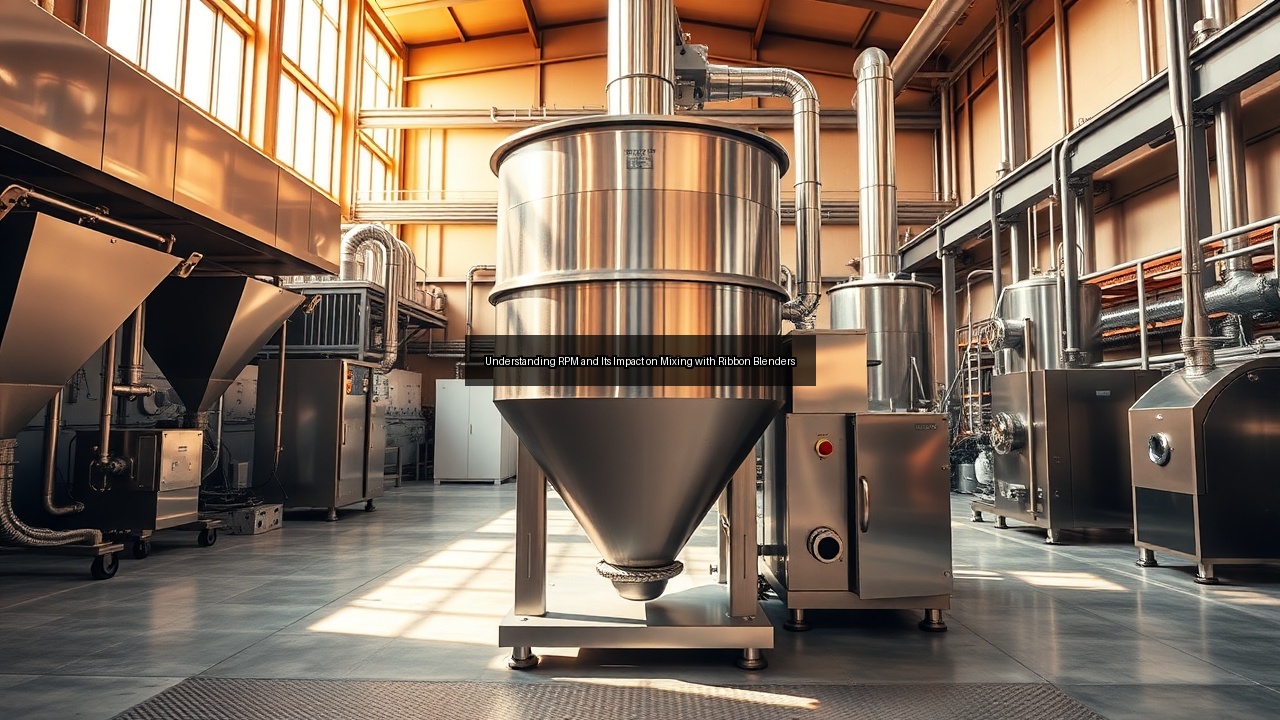
The Basics of Ribbon Blenders and Their Components
Understanding Ribbon Blenders
Ribbon blenders serve as essential tools in various industries, particularly in the realms of food processing, pharmaceuticals, and chemical manufacturing. These industrial mixers excel at blending dry powders and granulates, achieving uniform consistency through effective agitation. The design incorporates a horizontal trough and a set of helical ribbons, or screws, which rotate around a central shaft. This innovative configuration allows for thorough mixing while minimizing product degradation. The capacity of ribbon blenders varies significantly, making them suitable for both small and large-scale operations. Their versatility and efficiency contribute to their popularity as a go-to choice for industrial mixing tasks.
Key Components of Ribbon Blenders
Understanding the key components of ribbon blenders is vital for optimizing their performance. The primary elements include the trough, ribbons, the central shaft, and the drive mechanism. The trough, typically designed from 304 stainless steel, houses the mixing material and ensures easy access for cleaning and maintenance. The ribbons are engineered to provide both agitation and transport of materials, enabling effective blending. The central shaft supports the ribbons and connects to the drive unit, which determines the speed and efficiency of mixing. Each component ribbon screws plays a critical role in ensuring the ribbon blender operates smoothly, contributing to the overall mixing performance.
The Role of 304 Stainless Steel in Construction
304 stainless steel emerges as the material of choice for constructing ribbon blenders due to its excellent corrosion resistance and durability. In industrial mixing applications, the longevity of equipment translates directly into lower maintenance costs and increased productivity. This non-reactive stainless steel ensures that the integrity of the powders remains intact, preventing contamination during the mixing process. Additionally, its ability to withstand high temperatures and pressures makes it suitable for a range of applications. The choice of 304 stainless steel not only enhances the performance of ribbon blenders but also complies with industry standards, making it a reliable choice for manufacturers.
RPM: The Heart of Mixing Efficiency
What is RPM and Its Importance in Mixing?
Revolutions Per Minute (RPM) represents a critical parameter in the operation of ribbon blenders. It measures the number of complete rotations made by the blender's shaft in one minute, serving as a key indicator of mixing speed. Higher RPM values can lead to faster mixing times, improving production efficiency. However, excessive speed may also result in product degradation and inconsistent blends, particularly with delicate powders. Understanding the optimal RPM for specific applications allows operators to achieve the desired mixing characteristics while maintaining product quality. Balancing speed with thorough blending remains a fundamental aspect of effective industrial mixing.
How RPM Affects Mixing Performance in Ribbon Blenders
The RPM settings of a ribbon blender directly influence mixing performance. At lower RPMs, materials have more time to interact, leading to a more uniform mixture. This slower speed is particularly beneficial for fragile powders or sensitive formulations. Conversely, higher RPMs can expedite the mixing process, making it ideal for bulk materials that require quick blending. However, finding the sweet spot between speed and thoroughness is essential. Operators must assess the characteristics of the powders being mixed, including their flowability and density, to determine the most effective RPM. A well-calibrated RPM contributes significantly to achieving optimal mixing results.
Balancing Horsepower and RPM for Optimal Results
Achieving optimal mixing performance in a ribbon blender requires a careful balance between horsepower and RPM. Horsepower determines the power output of the motor that drives the blender, while RPM dictates the speed at which the ribbons rotate. Insufficient horsepower may lead to inadequate mixing, especially when handling dense or high-viscosity powders. Conversely, excessive horsepower combined with high RPM can cause wear and tear on the machinery, leading to premature failure. Operators should consider the specific requirements of their applications, selecting a ribbon screw blender with an appropriate horsepower rating that complements the desired RPM for efficient mixing.
Impact of Mixing Parameters on Powder Consistency
The Role of Troughs and Rotary Valves
The design and configuration of troughs and rotary valves significantly influence the consistency of powder blends in ribbon blenders. Troughs facilitate the movement and mixing of materials, allowing for optimal incorporation of all components. A well-designed trough ensures that the powders flow freely, preventing clumping and promoting uniformity. Rotary valves assist in controlling the discharge of mixed materials, allowing for precise measurement of output. Proper calibration of these components ensures that the blending process achieves the desired consistency, essential for applications where uniformity is critical.
Understanding the Behavior of Powders in Ribbon Blenders
Different powders exhibit distinct behaviors during the mixing process, impacting how effectively they blend in ribbon blenders. Factors such as particle size, shape, and moisture content play crucial roles in determining flow characteristics. For instance, fine powders may clump together, requiring adjustments in RPM and mixing time to achieve uniformity. On the other hand, larger particles might necessitate higher RPMs for effective blending. Understanding these behaviors allows operators to tailor their mixing parameters, ensuring that every batch meets quality standards. Knowledge of powder behavior enhances the overall effectiveness and reliability of the blending process.
Adjusting RPM for Different Powder Types
Adjusting the RPM of a ribbon screw blender based on the type of powder being mixed is essential for achieving optimal results. For delicate powders that are prone to degradation, lower RPM settings allow for gentle mixing, preventing damage. Conversely, when working with coarse or heavy powders, higher RPMs may be necessary to ensure thorough blending. The ability to fine-tune RPM settings based on powder characteristics empowers operators to enhance mixing efficiency and product quality. This flexibility in operation makes ribbon blenders invaluable in diverse industrial applications, where the nature of materials can vary significantly.
Choosing the Right Ribbon Screw Blender for Your Needs
Factors to Consider When Selecting a Ribbon Blender
Selecting the right ribbon screw blender involves evaluating several key factors. First, consider the type and volume of materials you intend to mix. The capacity of the blender should align with your production needs. Next, assess the characteristics of the powders, such as moisture content and particle size, to determine the appropriate mixing speed and configuration. Additionally, evaluate the construction material—304 stainless steel is often preferred for its durability and resistance to corrosion. Finally, consider the available space, maintenance requirements, and any specific features that may enhance operational efficiency, such as variable speed drives or automated controls.
Comparing Ribbon Blenders to Other Industrial Mixers
Ribbon blenders stand out among other industrial mixers due to their unique design and capabilities. Compared to paddle mixers, ribbon blenders provide more efficient mixing of powders, particularly in achieving uniformity in bulk materials. Unlike v-blenders, which are excellent for gentle mixing, ribbon blenders excel in applications requiring a thorough blend of diverse powders. Additionally, the continuous operation of ribbon blenders makes them suitable for high-volume production, setting them apart from batch mixers. Understanding these distinctions enables operators to choose the most appropriate mixing solution based on their specific requirements.
Maintenance Tips for Longevity of Your Mixer
Proper maintenance plays a critical role in prolonging the lifespan of ribbon screw blenders. Regular inspections help identify wear and tear on components, enabling timely repairs before issues escalate. Lubricating moving parts ensures smooth operation and prevents friction-related damage. Cleaning the trough and ribbons after each use prevents contamination and preserves product quality. Operators should also monitor RPM settings and horsepower to ensure they align with the manufacturer's specifications. By implementing these maintenance practices, facilities can maximize the efficiency and longevity of their ribbon blenders, ultimately enhancing overall productivity.
See Also
- Unlocking the Power of Ribbon Screw Blenders for Efficient Industrial Mixing
- The Impact of Screw Configuration on Mixing Efficiency
- Maximizing Efficiency with High Horsepower Ribbon Mixers
- Exploring the Advantages of Stainless Steel in Ribbon Blenders
- Customizing Your Ribbon Screw Blender for Unique Applications